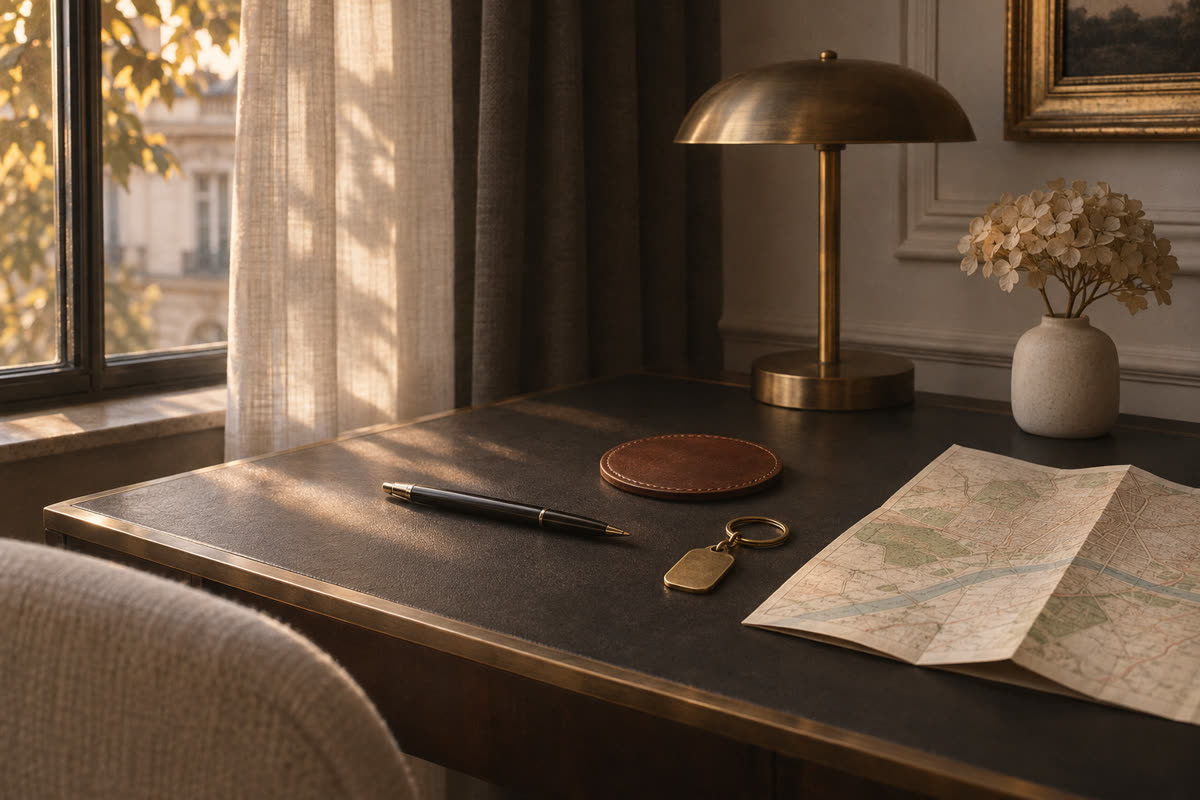
Walk into a hotel room after checkout and you can learn a lot in thirty seconds. The bed is stripped, the towels are gone, the minibar has been counted. But look at the desk. Look at the nightstand. Some things are missing, and some things are still sitting exactly where housekeeping left them three nights ago.
That difference is the whole business. A branded item that leaves the building is advertising. A branded item that stays is a cost. Same purchase order, opposite outcome.
We supply hotels with eight categories of take-home items, and over the years we have asked a fairly blunt question of every one of them: does the guest actually take it? Here is what we have learned, category by category — including the places where the answer is uncomfortable.
The items that leave almost every time
Pens go. Not all of them, but reliably enough that most hotels restock them as a consumable rather than a fixture. The reason is simple: a pen is useful, small, and feels like it belongs to whoever is holding it. Nobody feels guilty putting a hotel pen in a bag, because nobody thinks of it as property.
Fridge magnets also go, and they go further than people expect. A magnet is the only item in the room that ends up in a kitchen, which means it is seen by people who never stayed with you — family, flatmates, whoever is standing at the fridge. We have had hoteliers tell us a magnet from a property they visited fifteen years ago is still on their own fridge. That is not a marketing claim, it is just how magnets work.
Keychains sit somewhere between the two. Guests take them, but usually because they needed a keyring, not because they wanted a souvenir. The upside is retention: once a keychain is on a set of keys, it stays there for years and gets handled several times a day.
The items that leave, but only sometimes
Tote bags have the highest variance of anything we make. A sturdy canvas bag gets used for groceries, gym kit, the beach, the next trip. A thin promotional bag tears on the first shop and gets binned before the guest reaches the car park. The difference is almost never the print — it is the handle attachment and the fabric weight.
Luggage tags are similar. A leather or PU tag goes onto a suitcase and stays there, which means it works in front of strangers: at the carousel, in a taxi queue, at the next hotel. A flimsy card tag with a plastic loop gets removed the moment it looks tatty.
Toiletry bags are the most expensive item in most ranges and the one with the clearest justification. A bag gets packed for every subsequent trip, so the logo reappears in hotel bathrooms in other cities. But it only works above a certain quality bar — a bag that feels like a freebie gets left in the bathroom.
The items that often stay behind
This is where we have had to be honest with ourselves.
Key card holders are touched more often per stay than anything else in the room — every time a guest leaves and comes back, four to eight times a day. On paper that is the densest exposure in the range. In practice, most card holders are handed back at checkout, because that is what they are for. The exposure is intense but short, and it ends at the front desk.
Coasters are a middle case. A leather or stone coaster gets picked up about as often as a pen, but a cheap card coaster is treated as part of the furniture and left in place. Material decides whether it travels.
The lesson we took from this is simple and slightly uncomfortable: an item that belongs to the room will stay in the room. If you want the guest to take it, it has to feel like something they were given, not something they borrowed.
What this means when you are buying
Three practical rules come out of all of this.
First, buy for the hand, not the room. Ask what a guest would do with the item at 7am on departure day. If the answer is "leave it on the desk", you are buying room decoration, not marketing.
Second, weight beats print. Given a fixed budget, a heavier substrate with a small logo outperforms a light substrate with a large one. A 25g keychain gets kept. A 6g keychain gets binned.
Third, budget for replacement, not for a one-off. The items that work are the ones that get restocked — pens, magnets, coasters. If you treat them as a capital purchase you will under-buy, run out in month four, and end up with a gap in the room exactly when occupancy is highest.
A branded item that leaves the building is advertising. One that stays is a cost.
Why the take rate varies so much
The 30% figure we use in our own modelling is a rough average across categories, and it hides a lot of variation. Three things move it.
Property type. A city business hotel and a beach resort have almost nothing in common here. Business guests travel with a carry-on and a laptop bag; there is no room for a tote. Resort guests arrive with luggage they intend to fill, and a bag that says where they have been is part of the trip. The same item, in the same room, will be taken five times more often at the resort.
Length of stay. A one-night stay produces almost no take-up, because the guest never fully unpacks or settles. A four-night stay produces considerably more, because the room becomes a place the guest inhabits rather than passes through. This is why airport properties consistently underperform on take-home items and why they should not be measured against downtown hotels.
Whether the item looks like a gift. This is the one you control. An item presented on a tray, in a box, or with a card reads as something given. The same item left loose on a desk reads as something provided. The difference in take-up between the two presentations is significant, and it costs almost nothing to change.
The practical implication is that national benchmarks are close to useless for your property. The only number that matters is your own — and it takes one season to measure.
How to check your own room
The cheapest audit we know: next time you stay in a hotel — yours or anyone else's — photograph the desk and the nightstand before you leave, then again after housekeeping has been through. Whatever disappeared is doing its job. Whatever is still there, arranged neatly, is not.
If you want a rough number for your own property, our basket builder will total a year of items against your room count and show the exposure that comes with it. It takes about thirty seconds, and it will tell you fairly quickly whether your current mix is weighted towards things guests keep or things they leave.
The short version: most hotels over-invest in the room and under-invest in the bag. The bag is where the advertising happens.